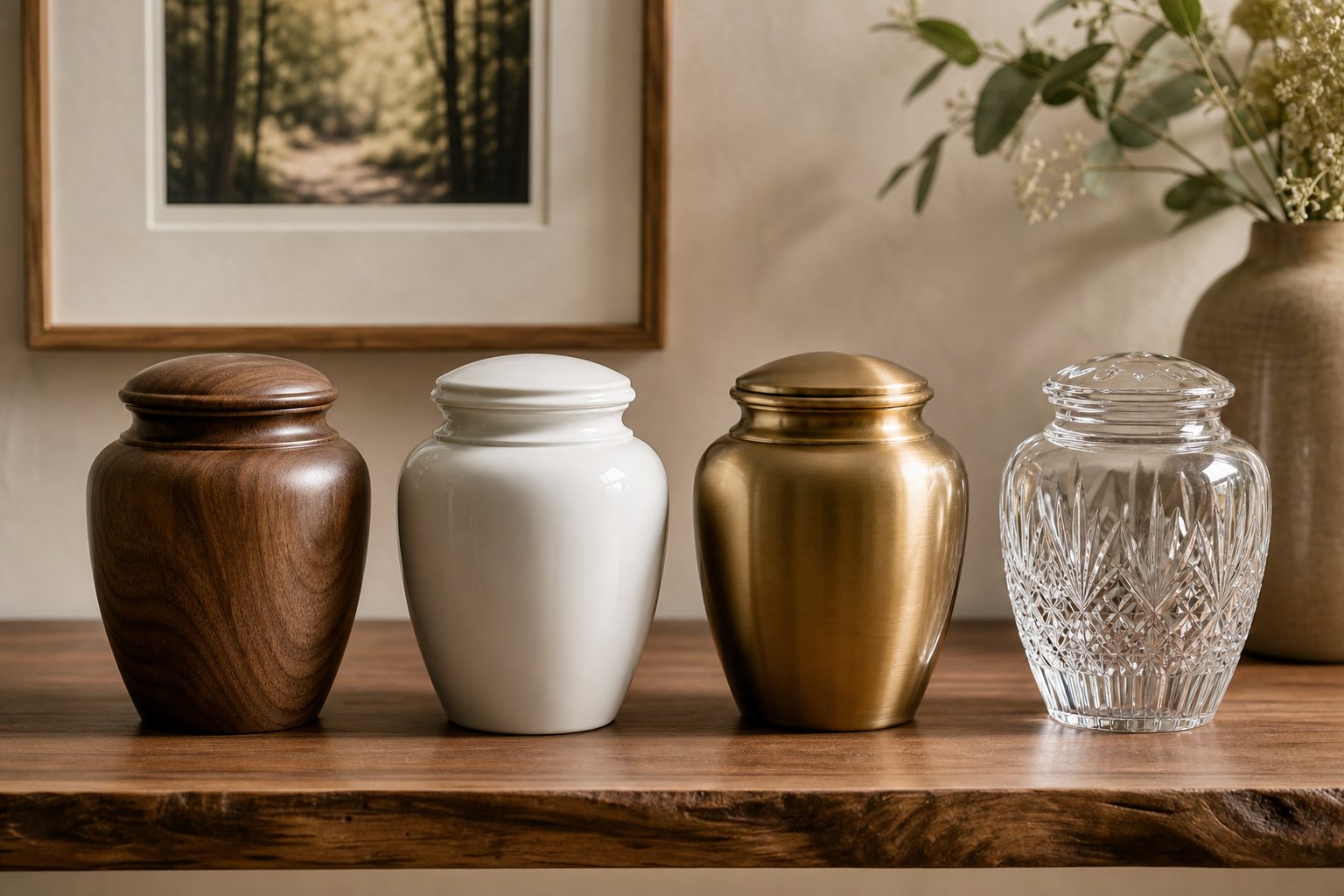
A memorial product line fails in two directions. Too narrow — one urn, one price — and you miss the emotional spread of grieving customers. Too broad — fifty SKUs ordered on instinct — and cash turns into slow-moving stock. The structure most experienced retailers converge on is a three-tier line: a light entry tier that completes the basket, a core tier that carries the volume, and a premium tier that carries the brand. This worksheet turns that structure into a buildable plan.
The market already thinks in three tiers
Segmentation here is not a merchandiser's invention. 360iResearch splits the global pet memorial products market — about USD 445 million in 2025, projected toward roughly USD 820 million by 2032 — into economy, mid-range and premium price bands (360iResearch, 2025). Grand View Research's demand analysis points the same way, citing pet humanization and the personalization of memorial products among its core growth drivers (Grand View Research, 2025). And behind the statistics sits a simple emotional spread that Pew Research Center quantified for the US: 97% of owners consider their pets family members (Pew Research Center, 2023). Some of those families want a simple wooden box; others want a named, engraved, lit memorial. One tier cannot serve both.
The tier worksheet
| Tier | Job in the line | Typical products | Indicative FOB range* | MOQ band |
|---|---|---|---|---|
| Entry — keepsakes | Completes the basket, low-regret add-on | Paw print kits, keepsake jewelry, mini urns | $0.9–6 | 50–200 pcs |
| Core — main urns | Carries volume and repeatable demand | Wooden urns, ceramic urns, pet caskets | $2.5–18 | 100–200 pcs |
| Premium — statement pieces | Carries brand and personalization margin | Crystal keepsakes, engraved memorial stones, framed memorial boxes | $3–20 | 100–300 pcs |
*Indicative order-based ranges that move with size, material and configuration — confirm per configuration when quoting.
Build the entry tier around "something to hold"
Entry items work when they are small, light and emotionally complete. Paw print kits give families a task during the waiting days between passing and the return of ashes; keepsake jewelry gives them something to keep close. The psychology is practical: when the main urn feels like a large decision, a small keepsake is how a hesitant customer says yes to the category at all. It is also the easiest honest upsell — many families divide ashes among family members, so a main urn plus one or two keepsakes reflects what they were going to do anyway.
Build the core tier around the size curve
Most dogs and cats fall within a predictable weight band, which maps to urn capacities between roughly 0.7 and 2.1 liters. A five-size wooden urn series plus one ceramic line covers the large majority of demand (our urn size chart lists the full table). Add a casket option for families that choose burial or a casket farewell, and the core tier is complete at around seven to nine SKUs — deep enough for choice, shallow enough to know your sell-through by heart.
Build the premium tier around personalization
The premium tier is not "a more expensive urn". It is personalization: laser engraving, UV-printed portraits, crystal and glass keepsakes, framed photo urns. Engraving turns a product into an artifact, and an artifact is what the premium tier is actually selling. It also protects margin — a name and two dates cost minutes of machine time and justify a visible price step between tiers.
The MOQ math that keeps the line alive
A three-tier line fails when the first order is too deep in any single tier. Work backward from pilot quantities: with a supplier offering MOQ from 100 pieces on stock private-label items and 500–1,000 on deeper custom work, a credible first order is 12–18 SKUs — five or six core urn sizes, four or five entry keepsakes, three or four premium pieces. That is enough to look like a line on a shelf, and shallow enough that the first reorder reflects real demand instead of a forecast's optimism.
A 90-day rollout checklist
- Weeks 1–2: pick the tier skeleton — 5–6 core sizes from the size chart, 4–5 entry keepsakes, 3–4 premium pieces.
- Weeks 3–4: sample across all three tiers; inspect engraving quality, packaging and shipping survival — not just how products look in photos.
- Weeks 5–8: launch with private label on the core tier; keep entry items neutral or lightly branded so they travel well as gifts.
- Weeks 9–12: read the first reorder signals — extend sizes that sold through, cut the SKU nobody touched, and move winning entry items into bundle sets.
FAQ
How many SKUs should a first memorial line have?
Twelve to eighteen across three tiers: five or six core urn sizes, four or five entry keepsakes, three or four premium pieces. Depth per SKU matters more than breadth; extend sizes after the first reorder tells you what your market actually is.
Should entry-tier items carry my brand?
Keep them neutral or lightly branded. Entry keepsakes often travel as gifts, and a quiet brand presence suits the occasion better. Reserve full private label for the core tier, where the brand earns its visibility on the product families keep at home.
How do I stop the premium tier from gathering dust?
Anchor it in personalization rather than materials alone — an engraved stone sells on a different logic than a bigger urn. Photograph one premium piece into every farewell scene you publish, and quote engraving lead times openly so buyers trust the promise before they commit.
Can I start with just one tier?
You can, and most sellers do. Start with the core tier plus two entry keepsakes, then add the premium tier once engraving and packaging workflows are proven. The tiers exist to protect cash flow, not to force a larger first order.
Sources & notes: market size and economy/mid-range/premium segmentation from 360iResearch (2025); demand drivers from Grand View Research (2025); family-member statistic from Pew Research Center (2023); US cremation cost context from CareCredit/Synchrony (2023). FOB ranges and MOQ bands follow PAWSANGEL product line specifications.
Send us your market and we will sketch the tiers with you
We map entry, core and premium tiers to your customer base — MOQ from 50 pieces on jewelry and 100 on urns, reply within 12 business hours.