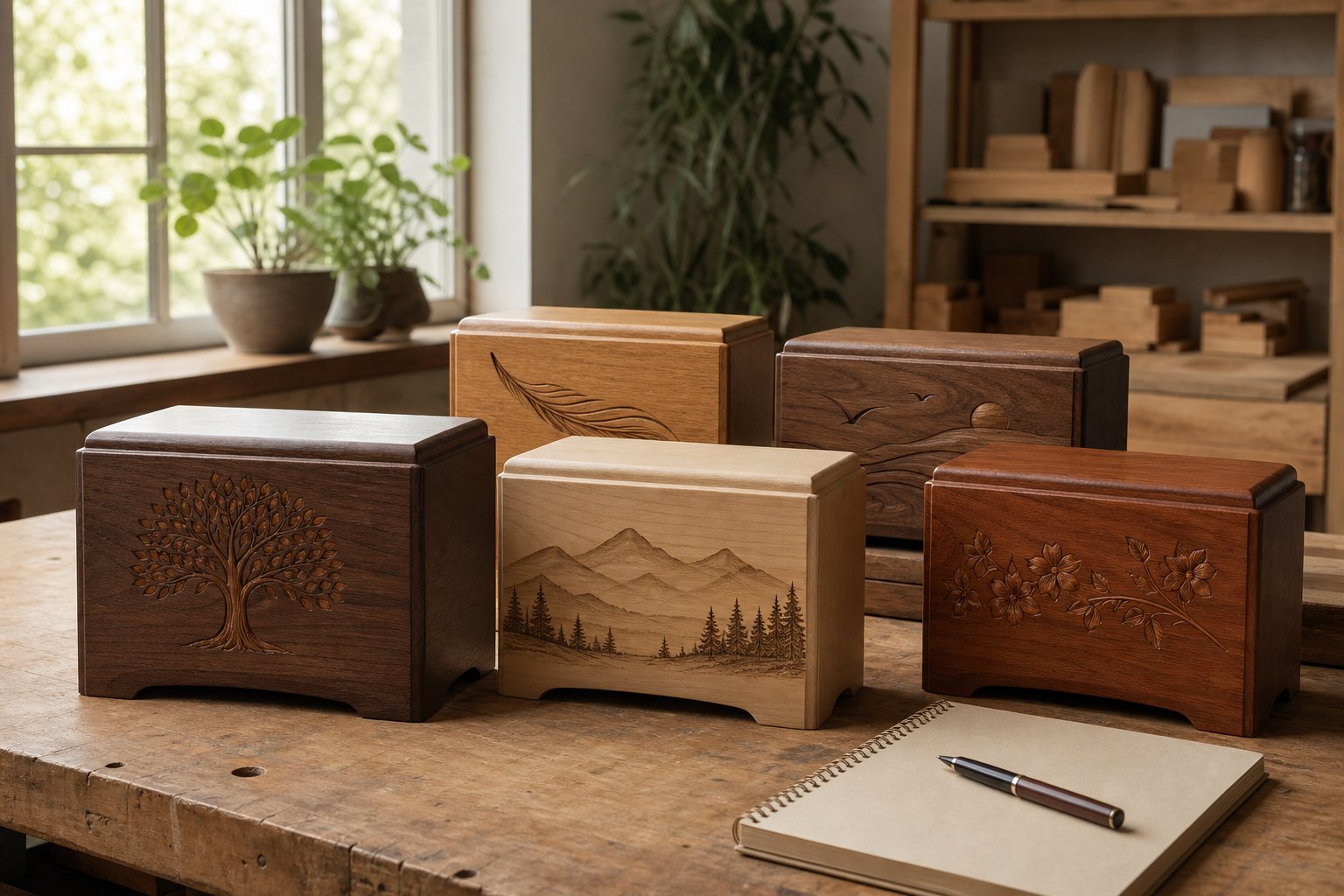
Pricing memorial products is a two-sided discipline. Commercially, prices must fund real quality — materials, engraving, protective packaging, service. Emotionally, prices must feel respectful in a context where the buyer is grieving and watching for signals of sincerity. The category offers an unusual amount of structure for both sides: service fees set the anchors, and the product line organizes into clear tiers. This article sets out that structure and the pricing behaviors that preserve both margin and dignity.
The anchors you inherit
Memorial products are never priced in a vacuum: they attach to a service the family has just paid for. In the US, pet cremation runs roughly USD 45–200 communal and USD 100–450 private by weight, and those fees generally exclude an urn — basic urns start around USD 50 (CareCredit/Synchrony, 2023). Two pricing consequences follow. The product sits in a window where a USD 50–150 memorial feels proportionate next to a several-hundred-dollar service; and because the urn is excluded from the service, the product decision is separate and less hurried — which rewards clear tier architecture over urgency tactics.
Three tiers, each with a job
| Tier | Typical forms | Job in the line | Pricing behavior |
|---|---|---|---|
| Economy | Keepsake jewelry, paw print kits, mini urns, cards | Entry, gifting, clinic counters | Impulse-adjacent; volume; gift framing |
| Core / mid-range | Wooden and ceramic urns, memorial stones | The default recommendation | Around the USD 50+ anchor; carries most orders |
| Premium | Crystal keepsakes, custom portraits, hand-carved stone, brass | Families seeking something singular | Priced for craft and materials; never discounted |
The three-tier frame is the market's own: 360iResearch segments pet memorial products into economy, mid-range and premium (2026). Each tier needs a reason to exist and a clear difference from its neighbors. Ten similar urns at ten price points do not create choice; they create hesitation. Three tiers with distinct materials and distinct stories create a dignified path upward — the family self-selects, and staff never have to upsell (analysis). Materials documentation on our quality and compliance page is the kind of substantiation that lets a core-tier price hold.
Respect as a pricing policy
- No flash sales, countdown timers or coupon blasts on grief products — urgency mechanics read as exploitation precisely when the purchase window is already painfully short (industry practice).
- Prefer bundles and complete sets over discounts: value is added without cheapening the flagship.
- Justify price with substance: name the wood species, the glaze, the engraving depth, the packaging standard — material honesty is this category's most legitimate price argument.
- Keep prices stable: families compare notes in communities and review platforms; volatility is remembered longer than the discount.
- Treat personalization as a tier, not a fee: the personalized product is a different product, and tier pricing preserves that dignity (analysis).
The B2B side: margin from anchor backwards
For wholesale buyers the exercise runs in reverse: start from the retail anchor in your market, subtract channel costs, and let the result define which FOB level you can build on. FOB levels vary by material and configuration — order-of-magnitude ranges rather than fixed numbers — so sample before you commit, and remember that MOQ affects unit economics as much as unit price does. Our MOQ-and-margin worked example walks the arithmetic with concrete numbers, and our OEM program page lists the MOQ tiers behind it.
FAQ
How should a retailer price a pet urn?
Work from the local anchors: in the US, private cremation runs USD 100–450 and basic urns retail from about USD 50 (CareCredit/Synchrony, 2023). Position the core urn around and above that anchor with a clear materials story, and let entry and premium tiers flank it.
Is discounting wrong in this category?
Flash discounts and urgency mechanics tend to read as exploitation in grief contexts. Bundles, complete sets and stable everyday pricing achieve the commercial goal without the respect problem (industry practice).
What margin should a B2B buyer target?
Reverse-engineer from your market's retail anchor minus channel costs; FOB levels vary by material and configuration, so treat them as order-of-magnitude ranges and confirm with samples before committing to a PO.
Does personalization justify a higher price?
As a tier, yes: personalization is a documented demand driver of the category (Grand View Research, 2025), and a personalized piece is not price-comparable to a stock one. Price it as a different tier rather than an added fee.
Sources & notes: CareCredit/Synchrony (2023) for US cremation fee ranges and the USD 50 base-urn anchor; 360iResearch (2026) for the economy/mid-range/premium tier framework; Grand View Research (2025) for the personalization demand driver. Pricing behaviors are industry practice and PAWSANGEL analysis (inference where labeled).
Building a three-tier memorial line for your market?
Tell us your retail anchors — we match FOB tiers and MOQ from 50 pcs to your price architecture, replying within 12 business hours.