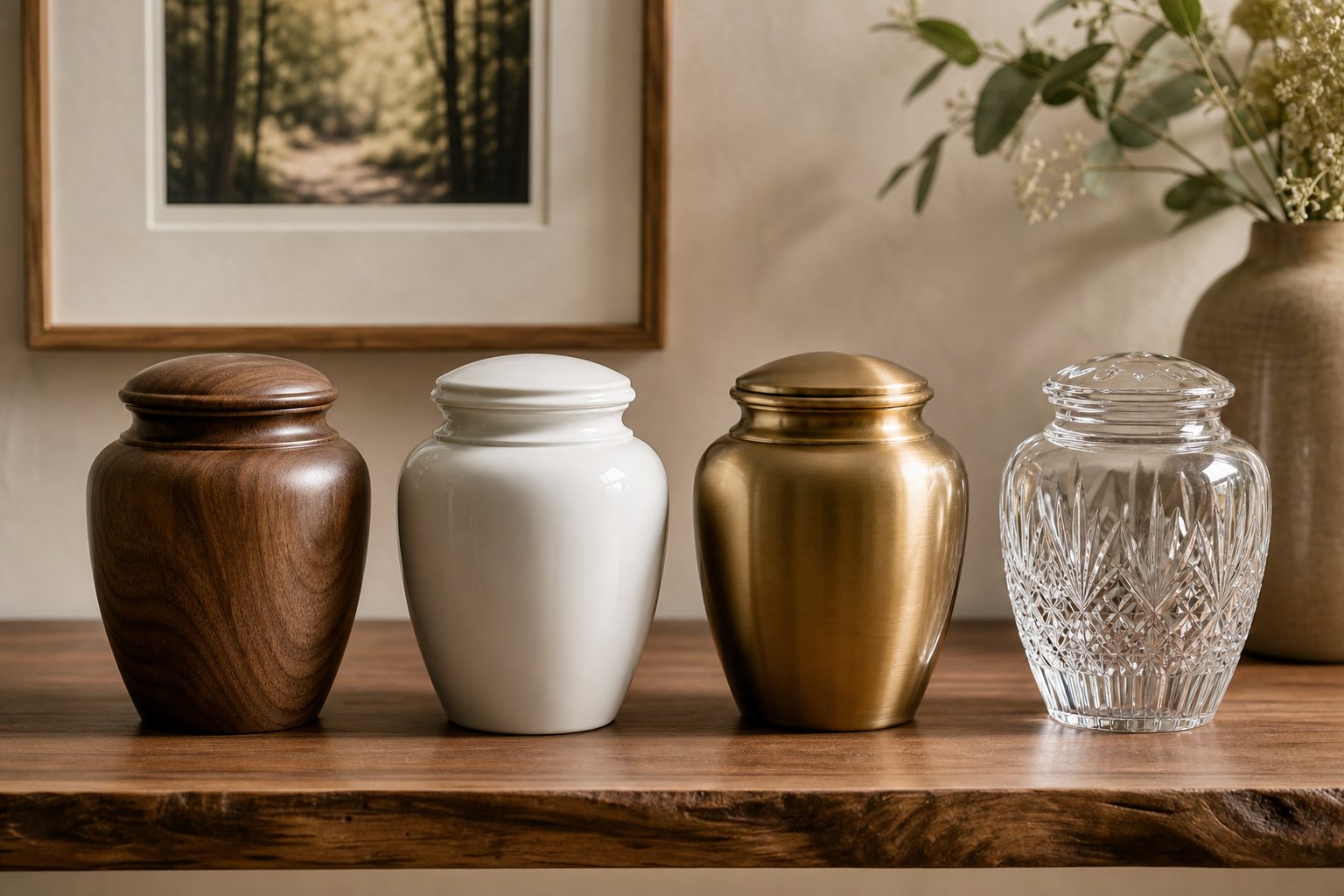
Every sourcing conversation in pet memorials arrives at the same fork: which material. The five families that dominate the category — wood, ceramic, metal, stone and resin — differ in weight, fragility, personalization cost and the way they travel through parcel networks. Those differences, not taste, should drive what you stock. This table puts the practical specifications side by side so you can shortlist before you sample.
The five material families, compared
| Material family | Typical forms | Weight & shipping risk | Personalization | Indicative MOQ | Indicative FOB band* |
|---|---|---|---|---|---|
| Wood (paulownia, walnut, oak, lacquered MDF) | Urns, caskets, photo-frame urns, memorial boxes | Light; low–medium risk | Laser engraving, painted color, frame inserts | 100 pcs | $3–12 |
| Ceramic (high-temperature) | Round and heart urns, keepsake jars, sculpted forms | Heavy, fragile; high risk | Glaze colors, hand painting, decal transfer | 200 pcs | $2.5–9 |
| Metal (brass, stainless steel, tin alloy) | Vertical and horizontal urns, engraved canisters | Medium; low risk | Deep engraving, enamel inlay | 200 pcs | $4–15 |
| Stone (slate, granite, river rock) | Memorial stones, plaques, garden markers | Very heavy; medium risk (edge chips) | Laser engraving, shape selection | 100 pcs | $3–14 |
| Resin | Figurines, sculpted urns, angel and animal forms | Light–medium; low–medium risk | Custom molds, painted detail | 200 pcs | $2.5–9 |
*FOB bands are magnitude ranges that move with size, finish and configuration; treat them as budget anchors, not quotes.
What the table cannot show: three buying notes
1. The word "wood" hides very different boards
Solid paulownia and lacquered MDF can look similar in photos and differ in weight, cost and paperwork. For United States-bound composite wood products, formaldehyde emissions fall under EPA TSCA Title VI limits — so ask which board a price assumes and request the corresponding report for engineered-wood lines. For European Union shipments, wood-origin disclosure under EUDR applies to large and medium enterprises from 2026-12-30 and to micro and small enterprises from 2027-06-30; FSC material can support that due-diligence work.
2. Fragility is a packaging line item, not only a property
Ceramic and crystal lines need molded foam or pulp inserts and double cartons. That adds a modest per-unit cost and protects the margin you would otherwise lose to replacements. When comparing supplier quotes, confirm the packaging standard is the same — otherwise you are comparing different products.
3. Personalization economics differ by material
Laser engraving on wood, stone and metal is per-piece digital work, so single-name personalization scales down to small orders. Ceramic personalization runs through glaze, hand paint or decals at batch level. Resin offers free-form shapes but a custom mold is a tooling investment with its own MOQ math (see our private label vs. custom mold comparison).
Matching materials to channels
360iResearch (2025) sizes the global pet memorial products market at USD 445 million in 2025, growing to USD 820 million by 2032, and organizes the category across frames, jewelry, ornaments and urns with ceramic, glass, metal and wood among its material families — buyers cross materials, so a balanced range usually beats a single-material assortment. In practice:
- Marketplace and dropship sellers: lead with wood and resin — light, personalization-friendly, parcel-safe.
- Funeral service providers and vet clinics: carry the full span including ceramic and metal, because handover happens in person and presentation matters at the moment of choice.
- Garden and outdoor assortments: stone and weatherproof lines carry the category; pair them with indoor keepsakes to complete the basket.
FAQ
Which material is the safest way to start a memorial line?
Wooden urns plus engraved slate stones. Both are light, engrave cleanly, tolerate parcel networks, and cover the two most common purchase intents: keeping ashes at home and marking a resting place.
Is resin an acceptable material for urns?
Yes, particularly for sculpted and painted forms where ceramic would be fragile or expensive. Position resin pieces as design-led memorials rather than heirloom hardwood, set expectations on weight and finish, and they perform well in marketplace assortments.
Which material takes the best engraving?
Paulownia burns with clean contrast for names and dates; slate gives deep, readable marks; metal holds fine lines for longer inscriptions. Ceramic engraving needs a coated surface or decal work instead — a different process to quote.
Do materials affect customs classification?
Yes. HS chapters largely follow material and essential character, so the same "urn" concept classifies differently in wood, ceramic, metal or stone. See our HS code guide for a chapter-level orientation.
Sources & notes: market size and material segmentation — 360iResearch, Pet Memorial Products Market (2025); composite wood formaldehyde limits — US EPA, TSCA Title VI standards; EUDR application dates — European Commission, Access2Markets (2025 revision); FOB bands and packaging standards — PAWSANGEL product specifications (magnitude ranges).
Shortlisting materials for your market?
Tell us your channel and price band — we will send the matching spec sheets and samples across wood, ceramic, metal, stone and resin lines.