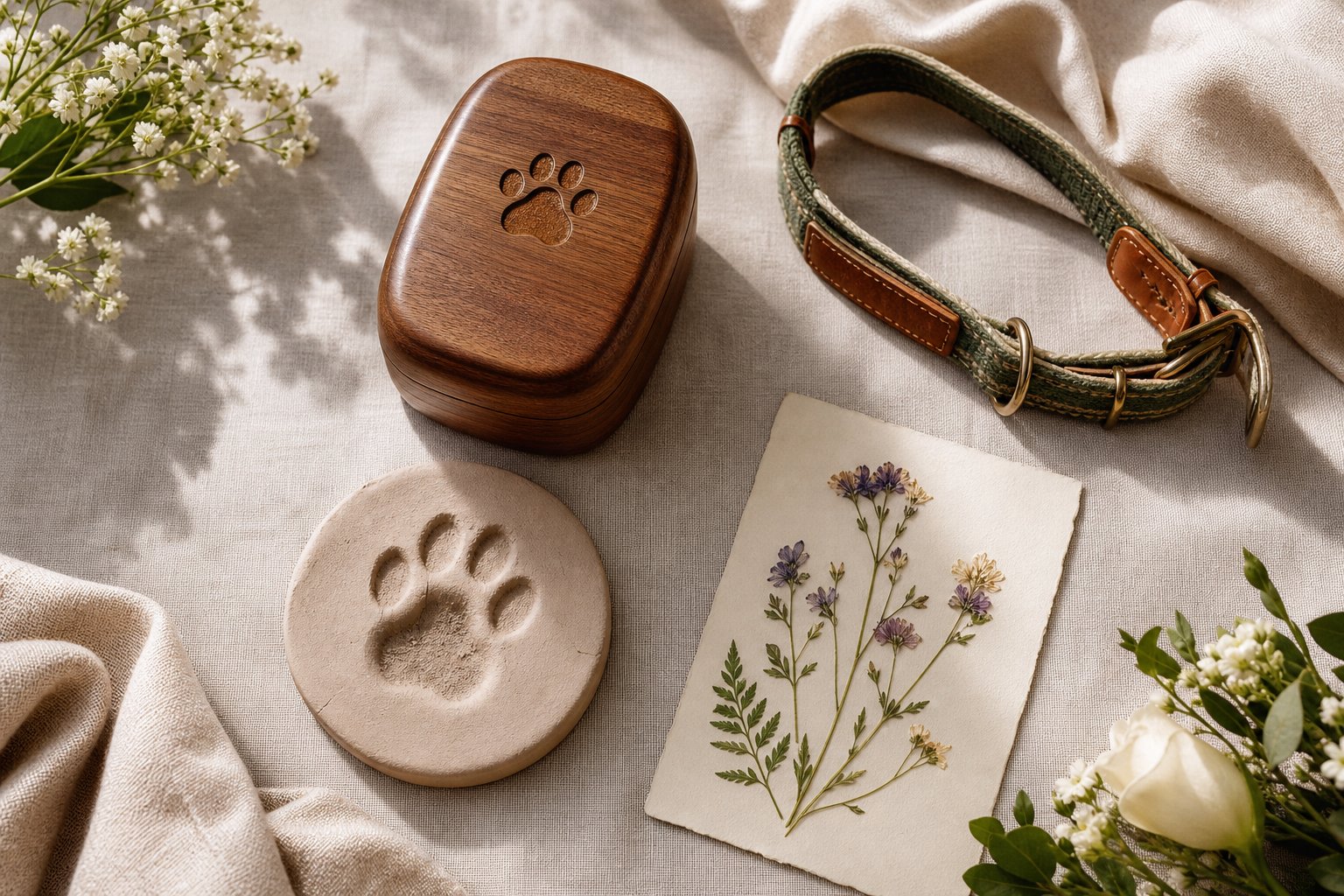
Pet humanization is the phrase the pet industry uses for a quiet social shift: households increasingly treat companion animals as family members, and family members get funerals, graves and keepsakes. For memorial product buyers, the trend is not a mood — it is a demand engine with citable numbers. This article collects the statistics we consider defensible, shows how they convert into product requirements, and flags one data gap you should not paper over in a business plan.
The numbers behind the trend
- Attitude: 62% of Americans own a pet; 97% of owners call them family; 51% call them equal to a human family member (Pew Research Center, 2023). Among dog-only owners the equality figure rises to 53%.
- Spending base: US pet industry spending reached 158 billion USD in 2025, with continued growth forecast for 2026 (APPA, 2025). Per-household veterinary spending runs 598 USD a year for dogs and 529 USD for cats (AVMA, 2025) — a standing measure of what "family care" already costs.
- Aftercare demand: the global pet funeral services market is valued at 1.7 billion USD in 2025, projected to 3.6 billion USD by 2033 at a 9.6% CAGR, with cremation holding 66.0% of service revenue (Grand View Research, 2025).
- Memorial products: a separate, product-level market of 445 million USD in 2025, projected to 820 million USD by 2032 at a 9.12% CAGR (360iResearch, 2025).
- Named drivers: Grand View Research explicitly credits pet humanization, willingness to pay for end-of-life services, and personalization of memorial products as demand drivers (2025).
From statistic to product requirement
| Humanization shift | Consumer behavior | Product response |
|---|---|---|
| Pet as family member | The remembrance should look like a family tribute, not pet accessories | Name-and-date engraving, memorial certificates, gallery-style photo frames |
| Willingness to pay for end-of-life care | Aftercare is bought as a service-and-goods bundle at the clinic | Vet-counter programs: paw print kits, sympathy cards, urn menus |
| Personalization expectation | Generic feels wrong for a specific, loved companion | Laser engraving, UV photo printing, custom figurines and portraits |
| Multi-person households | Several people want a piece of the remembrance | Keepsake splits: mini urns, pendants, small stones alongside the main urn |
The keepsake split deserves emphasis. Once a pet is framed as "our" family member rather than "my" pet, one urn stops being enough — parents, children and partners each want something small to keep. This is the quiet arithmetic behind the accessories attach rate in memorial retail, and it is why we treat mini urns and pendants as core SKUs rather than add-ons (inference).
A data gap worth naming
What this means for a 2026 assortment
- Personalization is table stakes. Engraving and photo capabilities belong in the base spec, not the upsell tier. Our OEM/ODM program covers name-and-date engraving and UV photo printing from the first sample.
- Emotional accessories pull their weight. Frames, figurines and felt portraits carry story value disproportionate to their price; see our frames and figurines line.
- Plan the basket, not the item. Main urn, keepsake, card and certificate sell as one emotional unit — merchandise them that way.
FAQ
What does pet humanization mean?
It describes households treating companion animals as family members — in daily spending, in medical care, and at the end of life, where the expectation shifts toward farewells and physical remembrance similar to those for human family.
Which statistic best captures the trend?
Pew Research Center (2023): 97% of US pet owners describe their pets as family members, and 51% say their pet is as much a part of the family as a human member.
How large is the memorial products market?
360iResearch values pet memorial products at 445 million USD globally in 2025, projected to 820 million USD by 2032 (9.12% CAGR). The surrounding services market — pet funeral services — is 1.7 billion USD in 2025, reaching 3.6 billion USD by 2033 (Grand View Research).
How should humanization change product development?
Three ways: build personalization into base specifications, plan keepsake splits so several family members can each keep something, and merchandise the farewell as a basket — urn, keepsake, card, certificate — rather than as isolated items.
Sources and notes: Pew Research Center (2023) for the 62%/97%/51% attitude figures; APPA (2025) for US industry spending of 158 billion USD; AVMA (2025) for per-household veterinary spending; Grand View Research (2025) for pet funeral services sizing, the 66.0% cremation share and named demand drivers; 360iResearch (2025) for pet memorial products sizing. Product-line and attach-rate observations are PAWSANGEL inferences, as labeled.
Building an assortment for family-minded buyers?
We will help you plan the basket — main urn, keepsake split, card and certificate — with personalization from the first sample. Reply within 12 business hours.