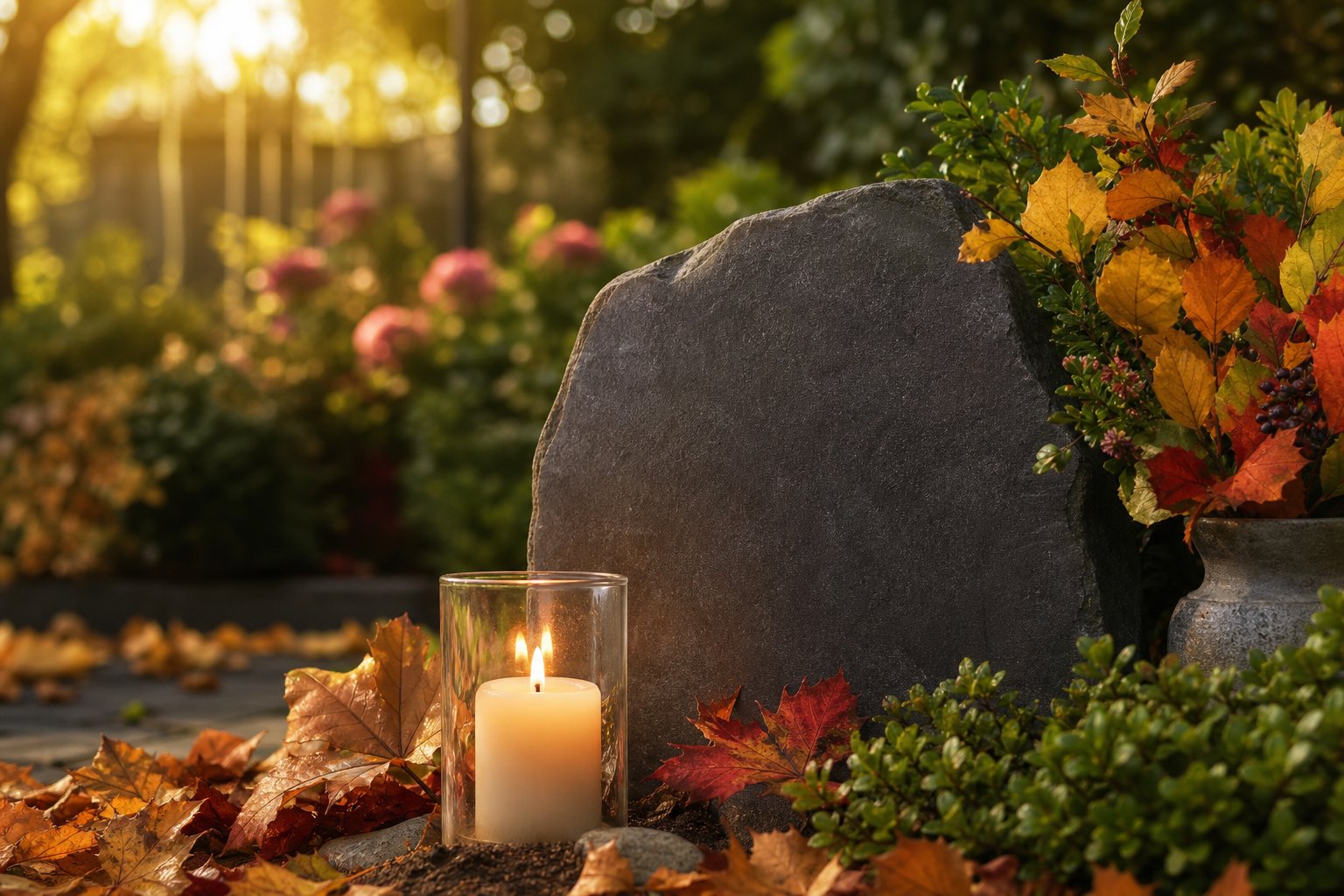
Germany is Europe's quiet anchor market for pet memorials: one of the continent's largest pet populations, a dense network of formal pet cemeteries, and legal rules permissive enough that the family garden remains a normal resting place. The combination produces a demand profile distinct from both the UK's garden culture and France's cemetery restrictions — and it rewards a specific kind of assortment.
The market in numbers
| Indicator | Figure | Source |
|---|---|---|
| Households owning pets | 43% (2025) | ZZF/IVH |
| Cats / dogs | 15.7M cats (24% of households) / 10.0M dogs (20%) | ZZF/IVH, 2025 |
| Pet cemeteries / crematoria / providers | ~120 / ~30 / ~160 | Bundesverband der Tierbestatter, via German media (dpa) |
| Annual dog and cat deaths | ~1.3 million | association figures via German media |
| First German pet crematorium | 1997, Munich | industry history via media |
The garden is the German memorial
Because burial on one's own land is generally permitted — common guidance calls for roughly 50–80 cm of soil cover, distance from water protection zones, and exclusion of infectious deaths — German memorial demand skews outdoor. Engraved stones, grave markers, solar lights and weatherproof garden products form the core of what moves; our memorial stones comparison and the garden memorials line map directly onto this demand. Personalization follows German engraving culture: precise names, dates, short German epitaphs, cleanly cut lettering. Engraving depth and finish are manufacturing questions before they are design questions — German customers inspect the cut, not just the layout.
The cemetery channel is small but formal
Around 120 pet cemeteries and roughly 30 pet crematoria operate nationally, with about 160 dedicated service providers (Bundesverband der Tierbestatter figures relayed via German media), against an estimated 1.3 million dogs and cats dying each year. Cemeteries sustain a steady niche for headstones and markers, and their operators behave like institutional buyers: consistent specifications, engraving proofs before production, repeat seasonal orders. For a supplier, one cemetery account behaves like several retailers — slower to open, steadier once opened.
Co-burial: a German specialty
Several German cities permit pet ashes to be interred with their owner's remains in human cemeteries — Hamburg among the reported examples (2019 reporting). Germany is effectively the pioneer market for human-pet co-burial in Europe, which creates a quiet product niche: urns and keepsakes designed to accompany a future grave, with discreet, dignified design language. It remains a niche by volume; it is also a differentiation almost no competitor's assortment carries, and a story German trade buyers immediately understand.
Importing into Germany: the EU file applies
Wooden memorials into Germany fall under the EU Deforestation Regulation timeline — due diligence duties apply from 2026-12-30 for large and mid-sized companies and from 2027-06-30 for micro and small ones (European Commission). Wood packaging follows ISPM15/IPPC practice as everywhere in the EU, and jewelry lines need REACH Annex XVII documentation. None of this is burdensome for a supplier who already ships to the EU; it is disqualifying for one who does not. Our EU import guide walks the full file.
FAQ
Can Germans bury a pet in their own garden?
Generally yes on private land, with common conditions: adequate soil cover (around 50–80 cm in common guidance), outside water protection areas, and not following an infectious death. Municipal rules vary, so buyers should confirm locally.
How large is Germany's pet population?
43% of households own pets, with about 15.7 million cats and 10.0 million dogs (ZZF/IVH, 2025) — among the largest pet populations in Europe.
Do German buyers expect personalization?
Yes, at a precision standard: engraved names and dates in clean German typography are the default on stones and markers, so engraving quality is a sourcing criterion, not an option.
What is special about co-burial in Germany?
Several German cities allow pet ashes to rest in the owner's later grave — a European first. It supports a niche of discreet companion urns and keepsakes designed for eventual interment, and Germany is the reference market for it.
Sources & notes: ZZF/IVH (2025), Heimtiere in Deutschland; Bundesverband der Tierbestatter figures (pet cemeteries, crematoria, providers, annual deaths) via German media relay (dpa/mz.de); co-burial practice per Deutsche Welle (2019); EUDR timeline from European Commission, Access2Markets; home-burial conditions as summarized in German media and official consumer portals.
Sourcing for the German market?
We build garden- and cemetery-ready ranges — engraved stones, weatherproof memorials, precise German typography — MOQ from 100 pcs. Reply within 12 business hours.