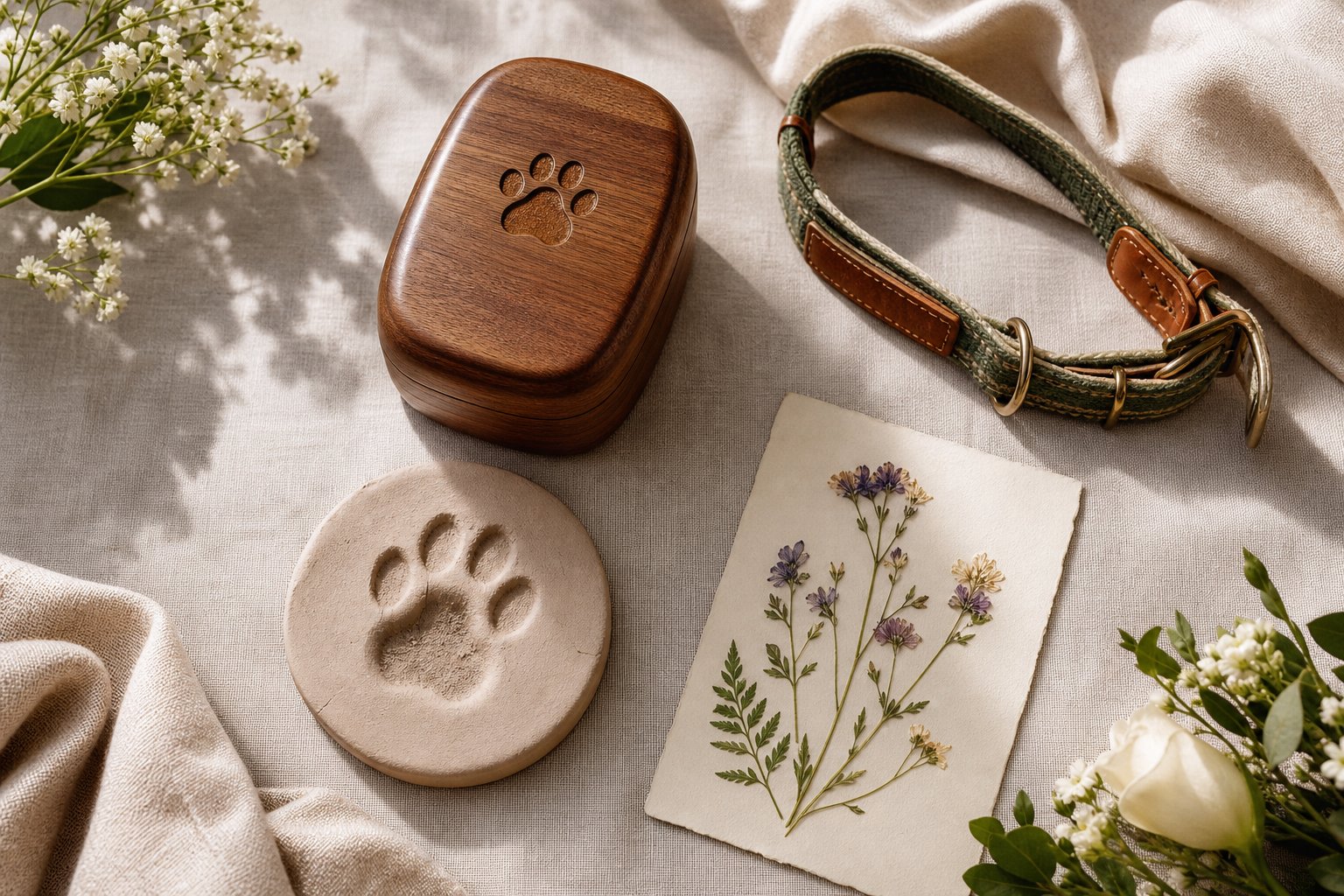
In most retail, tone is a style choice. In memorial retail, it is half the product. Customers arrive during the hardest week of their year, and every touchpoint — listing, box, email, invoice — either helps them or adds a small wound. Empathy selling is not about being sentimental; it is a set of operational rules that make respect repeatable, week after week and order after order. This guide condenses them into dos and don'ts you can hand to a new team member on their first day.
Who you are actually talking to
The vocabulary of this category is decided by how owners see their pets. In the US, 97% of pet owners describe their pets as family members, and about half consider them as much a part of the family as a human member (Pew Research Center, 2023). Write every listing with that in mind: the customer is arranging something for a family member, not disposing of an item. Clinical words like "remains" or distant words like "the animal" quietly undo the trust your product design has already built.
The dos and don'ts table
| Situation | Do | Don't |
|---|---|---|
| Listing copy | Plain, warm language: "a quiet place to keep him close" | Retail hype: "best deal", "amazing discount", countdown timers |
| Checkout | Offer a keepsake once, gently: "Many families also keep a small share of ashes" | Stack pop-ups and urgency banners on a grief purchase |
| Engraving | Confirm spelling and dates in writing before production | Treat a name error as a standard return case |
| Packaging | Plain outer carton, protective inner, no loud branding | Bright branded boxes with playful mascots on the label |
| Support | Answer sizing and capacity questions on the product page itself | Force a phone call for basic specifications |
| Claims | Promise what you control: dispatch time, packaging, replacement policy | Promise services you do not provide, such as handling or shipping ashes |
Six language rules that survive any market
- Name the pet's role, not the transaction. "For a beloved companion" reads differently than "for pet ashes".
- Be concrete where it helps. Capacity in liters and cubic inches, engraving line limits, dispatch times — concrete information is a form of care.
- Let local vocabulary lead. The Rainbow Bridge is widely understood in the US and UK; use it as customers use it, and read its meaning and respectful use before building a campaign on it.
- Retire the urgency machinery. "Only 2 left in stock" has no place beside a loss.
- Apologize once, fix it once. A free remake of an engraving error outweighs three paragraphs of apology.
- Keep discounts out of subject lines. "In-memory pricing" and "20% OFF everything" are different sentences entirely.
Upselling that does not feel like selling
The category has a natural basket: a main urn, a keepsake for a partner or child, a paw print kit made while the paw can still be printed. Presented as what families commonly do, this reads as guidance; presented as a bundle discount, it reads as commerce. Transaction context helps calibrate: US cremation services run roughly $45–450 by method and weight, and urns commonly start around $50 with cremation quotes excluding them — so the memorial often represents 20–50% of the total spend (CareCredit/Synchrony, 2023). The memorial is a meaningful share of the purchase, which is exactly why the way it is offered is what gets remembered — and reviewed.
A five-line support script
- "Thank you for trusting us with this."
- "This urn holds up to [X] liters, suited for pets up to [Y] kg — here is the size table."
- "Engraving takes [Z] days; we confirm the spelling with you before it starts."
- "Your parcel ships in plain packaging, within 48 hours on business days."
- "If anything arrives less than perfect, send a photo and we will replace it."
None of these lines is clever. That is the point: in this category, competence is the compassion customers can verify.
FAQ
Is it wrong to market at all in this category?
Families search for these products; helping them find a well-made urn is a service. What determines respect is how you market: honest product information, calm design and no pressure mechanics. The alternative — staying silent — leaves grieving customers with whatever drop-shipped generic the algorithm surfaces first.
Should we use the Rainbow Bridge in our copy?
In the US and UK it is shared vocabulary of comfort, and customers use it themselves. Use it as customers do — gently and sparingly — and localize with care in markets where the phrase carries little meaning. Our guide to the Rainbow Bridge covers origins and etiquette.
How should we handle a wrong engraving complaint?
Confirm the error from a photo, remake free of charge, ship by the fastest lane, and let the customer keep the original piece where possible. One fast remake builds more loyalty than any apology letter, and it converts a public complaint into a public compliment.
What kind of packaging reads as respectful?
A plain outer carton for discretion, a quiet inner gift box, tissue paper and a simple sympathy card. Nothing needs to be luxurious; it needs to be calm, protective and free of retail noise. Reviewers mention packaging by name when it is wrong — and when it is right.
Sources & notes: pet-as-family statistics from Pew Research Center (2023); US cremation and urn price context from CareCredit/Synchrony (2023). Dispatch, packaging and remake practices described follow PAWSANGEL published policies.
Building a grief-respectful retail experience?
We support the operational side: discreet packaging, fast dispatch and pre-production engraving proofs — ask us how it works, reply within 12 business hours.